
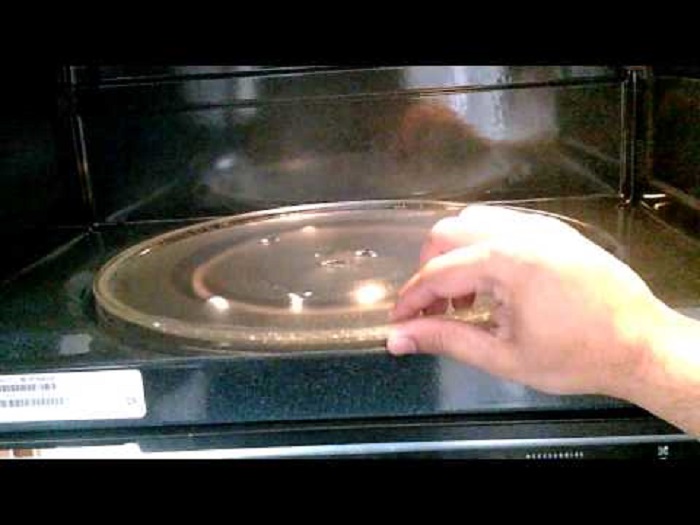
The rotating glass plate in a microwave oven ensures even heating: the food receives energy throughout the entire cavity, not just in one area. When the plate stops rotating, the food heats up in spots, with some remaining cold and others drying out.
The problem could be as simple as a crooked plate or a clogged roller mechanism, or as electrically related as the tray motor, wiring, or control board. Below are the main causes and easy-to-understand solutions. In difficult situations, it is worth contacting your local microwave repair service.
How to safely de-energize a microwave and prepare the work area before inspections
Before any inspections or disassembling the microwave, completely de-energize it: turn it off using the power button (if applicable), unplug it from the outlet, and make sure the indicators on the control panel are off.
Don’t just wait for it to cool down: there are components inside the microwave that can retain dangerous voltage even after unplugging, so independent work is only permissible for visual inspections and simple checks without access to high-voltage components.
Step-by-step preparation and safety rules
- Disconnecting from the power supply: unplug the microwave from the outlet, do not pull on the cord; If necessary, turn off the circuit breaker/RCD on the line.
- Check for power failure: Make sure the backlight, display, and sounds do not work when pressing buttons.
- Choosing a location: Place the oven on a stable, dry, well-lit table; ensure easy access from all sides.
- Avoid moisture and metal: Remove water, wet rags, and metal jewelry from your hands; work with dry hands.
- Preparing tools: Have a Phillips/slotted screwdriver (if access to the bottom is required), a flashlight, a soft brush, napkins, and gloves ready; Keep fasteners in a separate container.
- Securing small parts: Remove the glass tray and roller ring, rinse/dry, and set aside to prevent anything from falling or cracking.
- Permissible checks without disassembling the housing: Inspect the tray, rollers, and drive coupling/sleeve (inside the chamber), clean the mounting surfaces, and check the free movement of the roller ring.
- Access to the high-voltage part is strictly prohibited: Do not remove the casing or touch components inside the housing (high-voltage capacitor, transformer, magnetron, and wiring) without qualification and proper discharge measures – the risk of electric shock remains even with the plug removed.
- Check before switching on: Replace the tray and rollers, making sure nothing remains inside the chamber; Only then connect the oven to the power supply for a test.
- If the pan motor, wiring, fuses, or control board require inspection, it is safer to contact a service center.
- If there is a burning smell, sparking, signs of melting, or if the circuit breaker/RCD trips, do not turn the oven on again.
Bottom line: Properly de-energizing and preparing the work area reduces the risk of injury and damage to equipment. Perform only external inspections and cleaning, and leave work inside the oven to a specialist.